
What a Circuit Breaker Does and Why It May Trip
A circuit breaker protects your electrical system by stopping the flow of electricity when something is wrong. Its basic job is to interrupt the current when it detects current from an overload or short circuit, helping prevent damage to wiring and lowering fire risk.
In new homes, breakers may also include extra protection, such as GFCI or AFCI functions, depending on the circuit and the new home wiring set up. If your breaker trips, treat it as a warning.
According to the U.S. CPSC, you should not just reset it to find out why it tripped. Common causes include overloaded circuits, faulty products, or short circuits.
Common Reasons a Circuit Breaker Keeps Tripping
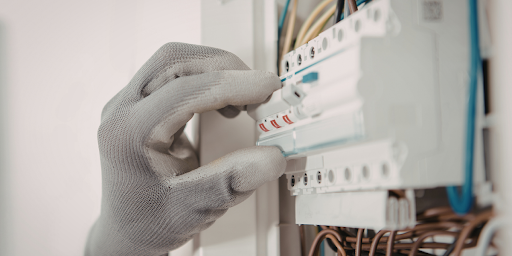
Overloaded Circuit
This will happen when too many appliances or devices are drawing power from the same line at once. ESFI notes that overloaded circuits often show warning signs such as flickering lights, warm or discolored wall plates, buzzing receptacles, burning odors, and frequent breaker trips.
Faulty Appliance
If one toaster, microwave, heater, or other device repeatedly trips the same breaker, the issue may be inside the appliance rather than the wiring. ESFI advises that an appliance that repeatedly blows a fuse or trips a breaker may have a defect that could lead to a fire or shock, and that it should be unplugged and repaired or replaced.
Short Circuits and Ground Faults
A short circuit will occur when electrical current takes an unintended path through very low resistance, while a ground fault involves leakage current leaving the intended circuit path. These conditions can cause a breaker or protective device to trip immediately, especially when the circuit serves kitchens, bathrooms, laundry areas, garages, or outdoor locations where GFCI protection is common.
Arc Faults
Arc faults can also cause breakers to trip, particularly in bedrooms, living areas, and older homes with aging wiring. creating a high-temperature spark that may ignite surrounding materials.
Arc faults can develop when wires are worn or cracked, or when a nail or screw pierces the wiring, or when outlets and circuits are overburdened. Breakers equipped with AFCI protection are designed to sense this dangerous arcing and will trip to prevent a potential fire.
How to Handle a Circuit Breaker That Keeps Tripping
Start with the safest first step:
Turn off or unplug devices on the affected circuit, especially high-draw items like space heaters, hair dryers, microwaves, or portable cooking appliances. If the breaker tripped due to overload, removing some load may resolve the immediate issue.
Next, reset the breaker once. If it holds after you unplug devices, plug items back in one at a time to see whether a specific appliance triggers the trip again.
That can help narrow down whether the problem is circuit overload or a faulty device. If one appliance consistently trips the breaker, stop using it until it is checked or replaced.
Do not keep forcing resets if the breaker trips right away again. Repeated resetting without fixing the cause can be unsafe, and CPSC specifically warns against simply replacing a breaker with a higher-amp device to stop the nuisance.
Signs It’s Time to Call a Licensed Electrician

Call a licensed electrician if the breaker trips immediately after reset, trips with very little load, or keeps tripping for no obvious reason. Those patterns can point to a short circuit, a hidden wiring issue, an improper breaker function, or a more serious fault that requires professional diagnosis.
You should also stop and get help if you notice warning signs such as a burning smell, buzzing sounds, warm outlets or switches, flickering or dimming lights, discolored wall plates, or a mild shock or tingling sensation when touching an appliance or switch. ESFI and NFPA both identify these as signs of potentially dangerous electrical problems.
An electrician is also the right call when the issue involves moisture-prone areas, outdoor circuits, older wiring, or breakers with GFCI or AFCI protection that keep tripping without a clear appliance-related cause. If the system is outdated or damaged, a licensed electrician may need to remove old wiring to improve safety and prevent recurring issues. Ground-fault and arc-fault problems can be subtle, and the fix may involve the receptacle, the fixture, the wiring path, or the breaker itself.
Conclusion
If your circuit breaker keeps tripping, take it seriously. In the best-case scenario, it is warning you that one circuit is carrying too much load.
In the worst case, it may be protecting your home from dangerous heat buildup, faulty wiring, arcing, or shock hazards. Either way, the trip is a signal, not an inconvenience to ignore.
A single reset after reducing the load is reasonable. Repeated trips, immediate trips, strange odors, buzzing, hot outlets, or signs of damaged wiring are not.
Don’t let a minor electrical issue grow into a bigger safety concern. Schedule an inspection with R&A Langevin and have your circuit breaker problems checked by a licensed electrician.