
Regular electrical inspections help keep your home or business safe, efficient, and ready for everyday use.
An inspection can identify hidden wiring issues, overloaded circuits, outdated panels, damaged outlets, and other electrical problems before they turn into bigger repairs or safety risks.
You should schedule an electrical inspection if your breakers trip often, your lights flicker, your outlets feel warm, you smell burning, your electrical panel is outdated, or you are planning a renovation, property sale, or major electrical upgrade.
For homeowners and businesses, inspections are one of the simplest ways to catch problems early and keep the electrical system working safely.
Why Regular Electrical Inspections Matter
Electrical problems are not always easy to see.
A loose connection, aging wire, overloaded circuit, or damaged outlet may be hidden behind walls or inside your electrical panel. You may not notice a problem until the lights flicker, a breaker trips, or an outlet stops working.
Regular electrical inspections help uncover these issues early.
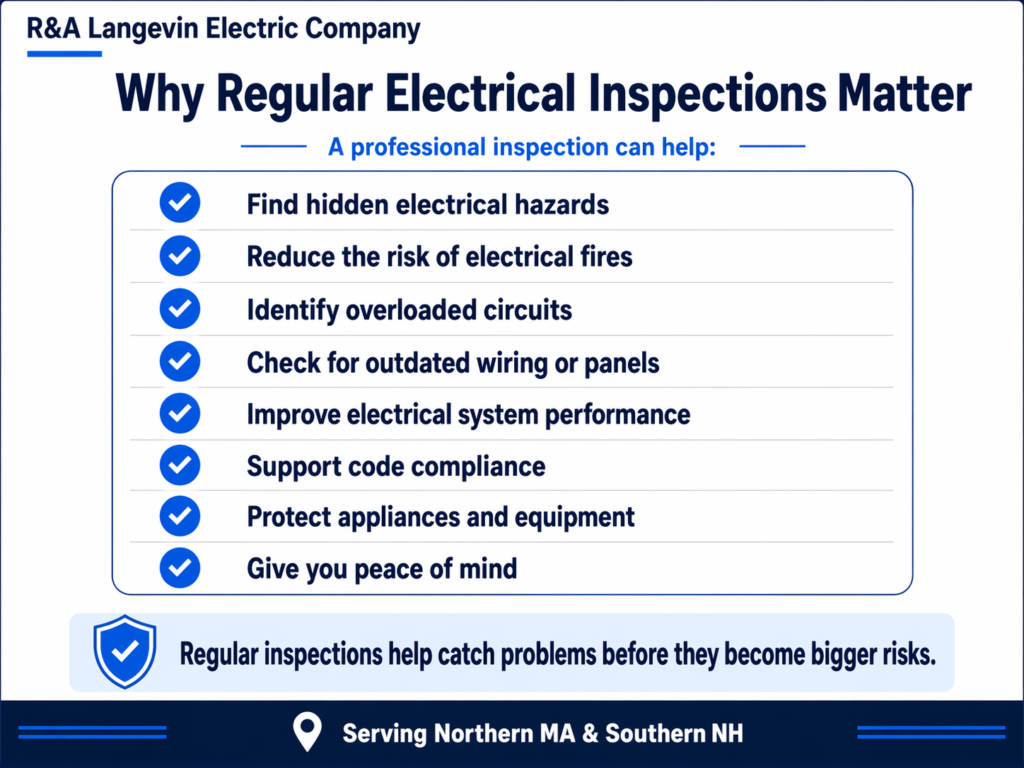
If you are concerned about your home’s electrical system, our residential electrical services can help you schedule the right inspection or repair.
1. Electrical Inspections Help Find Hidden Hazards
Many electrical issues start small.
A loose wire, overloaded circuit, damaged outlet, or worn connection may not seem urgent at first. But over time, these problems can create heat, damage components, or increase the risk of electrical failure.
During an inspection, a licensed electrician can check your electrical system for signs of wear, damage, or unsafe conditions.
This may include checking:
- Electrical panels
- Breakers
- Outlets
- Switches
- Wiring
- Grounding
- Circuits
- GFCI protection
- Visible electrical components
Catching these problems early can help you avoid larger repairs later.
2. Inspections Can Help Reduce Fire Risks
Electrical issues can become dangerous when they are ignored.
Overloaded circuits, loose wiring, damaged outlets, and outdated panels can all increase fire risk. These problems may not be obvious until there is already visible damage, a burning smell, or a power issue.
An electrical inspection helps identify these risks before they become more serious.
You should call a licensed electrician right away if you notice:
- Burning smells
- Scorch marks near outlets or switches
- Warm outlets
- Flickering lights
- Buzzing sounds
- Breakers that keep tripping
- Sparks from outlets or the electrical panel
These signs should never be ignored. They may point to a problem that needs immediate attention.
3. Inspections Help Keep Your Property Code-Compliant
Electrical codes exist to help protect people and property.
If your wiring, outlets, panel, or circuits are outdated, damaged, or installed incorrectly, your property may not meet current safety standards.
This matters even more if you are:
- Renovating your home
- Adding new rooms
- Finishing a basement
- Upgrading your panel
- Installing new appliances
- Selling your property
- Managing a commercial building
A professional inspection can help identify code-related concerns and explain what needs to be repaired, upgraded, or replaced.
For larger projects, our electrical services can help with inspections, repairs, upgrades, and safe installation work.
4. Inspections Can Help Prevent Costly Repairs
Small electrical problems can become expensive when they are left alone.
For example, a loose connection may damage wiring over time. An overloaded circuit may keep tripping. An outdated panel may struggle to support modern appliances and devices.
Regular inspections help you catch these issues before they cause bigger problems.
This can help reduce the risk of:
- Damaged appliances
- Failed outlets
- Repeated breaker trips
- Panel issues
- Wiring damage
- Unexpected power problems
- Emergency electrical repairs
An inspection gives you a clearer picture of your electrical system’s condition, so you can plan repairs before they become urgent.
5. Inspections Support Better Energy Efficiency
An electrical inspection can also help identify areas where your system may not be working efficiently.
Old wiring, overloaded circuits, loose connections, or outdated equipment can affect how your electrical system performs.
While an inspection is mainly about safety, it can also reveal opportunities to improve how your home or business uses power.
A licensed electrician may recommend updates such as:
- Repairing damaged wiring
- Replacing outdated outlets
- Upgrading older panels
- Improving circuit layout
- Installing safer electrical components
- Updating lighting systems
These improvements can help your electrical system work more reliably and support your property’s current needs.
6. Inspections Are Important for Older Homes
Older homes often have older wiring, panels, outlets, and electrical layouts.
Many homes were built before today’s appliances, devices, smart systems, home offices, and EV chargers became common. Because of this, the electrical system may not be able to support modern power demands safely.
You should consider an inspection if your home has:
- An older electrical panel
- Two-prong outlets
- Frequent breaker trips
- Flickering lights
- Old or damaged wiring
- Limited outlets
- Extension cords used regularly
- No GFCI outlets in key areas
- Plans for renovation or upgrades
An inspection can help determine whether your electrical system needs repairs, upgrades, or a full panel replacement.
7. Businesses Also Need Regular Electrical Inspections
Electrical inspections are not just for homes.
Businesses rely on safe, steady power for equipment, lighting, security systems, computers, appliances, and daily operations. An electrical issue can interrupt work, damage equipment, or create safety concerns for employees and customers.
Commercial electrical inspections can help identify:
- Overloaded circuits
- Outdated wiring
- Panel capacity issues
- Faulty outlets
- Lighting problems
- Code concerns
- Equipment-related electrical demands
- Potential safety risks
If you own or manage a business, our commercial electrical services can help with inspections, repairs, upgrades, and ongoing electrical needs.
8. Inspections Are Helpful Before Buying or Selling a Property
An electrical inspection is a smart step before buying or selling a home or commercial property.
For buyers, it can help uncover hidden electrical issues before the purchase is final. This may include outdated wiring, unsafe panels, damaged outlets, overloaded circuits, or code concerns.
For sellers, an inspection can help identify problems before they delay the sale or become negotiation points.
A professional inspection can give both sides more confidence in the condition of the property’s electrical system.
9. Inspections Matter Before Renovations or Major Upgrades
If you are planning a renovation, schedule an electrical inspection before work begins.
Renovations often require more electrical capacity, new wiring, added outlets, updated lighting, or panel upgrades. An inspection helps confirm whether your current system can support the planned work.
You should schedule an inspection before adding:
- A home office
- A finished basement
- A kitchen remodel
- New appliances
- HVAC equipment
- An EV charger
- A hot tub
- More lighting
- A home addition
- Commercial equipment
Planning ahead can help prevent delays, avoid overloads, and make sure the finished project is safe and functional.
When Should You Schedule an Electrical Inspection?
You should schedule an electrical inspection when something feels wrong or when your property is going through a major change.
Common reasons to schedule an inspection include:
- Breakers trip often
- Lights flicker or dim
- Outlets or switches feel warm
- You hear buzzing from outlets, switches, or the panel
- You smell burning or see discoloration
- Your electrical panel is old or outdated
- Your home is 25+ years old
- You are buying or selling a property
- You are planning a renovation
- You are adding major appliances
- You are installing an EV charger
- Your business needs a safety or code compliance check
Even if everything seems to be working, an inspection can reveal early warning signs that are easy to miss.
How Often Should You Schedule an Electrical Inspection?
There is no one-size-fits-all schedule for every property.
How often you need an inspection depends on the age of the property, the condition of the electrical system, how much power you use, and whether you are planning upgrades.
Older homes, commercial spaces, renovated properties, and buildings with frequent electrical issues may need inspections more often.
You should schedule an inspection sooner if you notice warning signs like flickering lights, warm outlets, buzzing sounds, burning smells, or frequent breaker trips.
Do You Need an Electrical Inspection?
If you are not sure whether your electrical system needs attention, it is better to ask before the issue gets worse.
R&A Langevin Electric Company provides electrical services for homeowners and businesses across Southern New Hampshire and Northern Massachusetts.
Whether you need a safety inspection, repair, panel check, wiring update, or help planning a larger project, our team can help you understand the next step.
Contact R&A Langevin Electric today to schedule an inspection or request a quote.
Frequently Asked Questions
Why are regular electrical inspections important?
Regular electrical inspections help identify wiring issues, overloaded circuits, outdated panels, damaged outlets, and other safety concerns before they become bigger problems.
How often should I schedule an electrical inspection?
Inspection frequency depends on your property’s age, condition, electrical use, and whether you are planning upgrades or renovations. Older homes, commercial spaces, and properties with warning signs may need inspections more often.
What are signs that I need an electrical inspection?
You should schedule an inspection if your breakers trip often, lights flicker, outlets feel warm, switches buzz, you notice burning smells, or your electrical panel is old or damaged.
Do I need an electrical inspection before buying a home?
Yes. An electrical inspection can help uncover outdated wiring, unsafe panels, overloaded circuits, damaged outlets, or code concerns before you finalize the purchase.
Can an electrical inspection help prevent fires?
Yes. Electrical inspections can identify hazards such as loose wiring, overloaded circuits, damaged outlets, overheating components, and aging electrical equipment that may increase fire risk.
Do businesses need regular electrical inspections?
Yes. Commercial electrical inspections help support safety, code compliance, equipment performance, and business continuity.
Who should perform an electrical inspection?
A licensed electrician or electrical contractor should perform the inspection. Electrical systems can be dangerous, and inspection work requires proper training, tools, and safety knowledge.
Should I schedule an inspection before a renovation?
Yes. An inspection can help confirm whether your electrical system can support new appliances, added outlets, lighting changes, panel upgrades, or other renovation-related electrical needs.