
Electrical panel replacement often costs around $1,300 to $4,500, depending on the panel size, amperage, wiring condition, permits, labor, and whether the home needs a larger service upgrade. A basic panel replacement may cost less, while a 200 amp upgrade, older-home wiring corrections, or service changes can raise the final price. National estimates vary: Angi lists a typical replacement range of about $518 to $2,189, with costs reaching $4,500 for more involved work, while HomeGuide estimates 200 amp panel upgrades around $1,300 to $1,600, or $1,800 to $2,500 when a new service panel is required.
For homeowners in Southern NH and Northern MA, the best way to price the job is through an inspection. A licensed electrician can check your existing panel, service capacity, grounding, wiring, breaker condition, and whether permits or utility coordination are needed.
Average Electrical Panel Upgrade and Replacement Cost
There is no single price for every electrical panel project because the scope can change quickly from home to home.
A straightforward replacement may involve swapping an outdated or damaged breaker panel with a newer panel of similar capacity. A more involved upgrade may include moving from 100 amps to 200 amps, adding circuits, correcting older wiring, replacing service equipment, or coordinating with the utility company.
Here is a general planning guide:
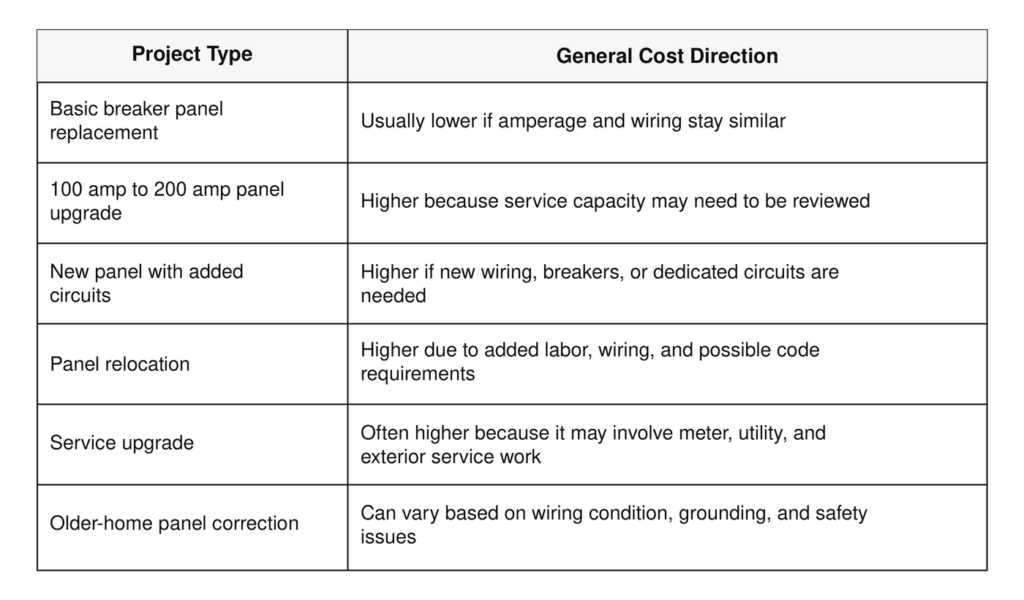
The panel itself is only part of the cost. Labor, permits, inspection requirements, existing wiring, and the condition of the home’s electrical system usually have a larger impact on the final estimate.
What Affects the Cost of an Electrical Panel Upgrade?
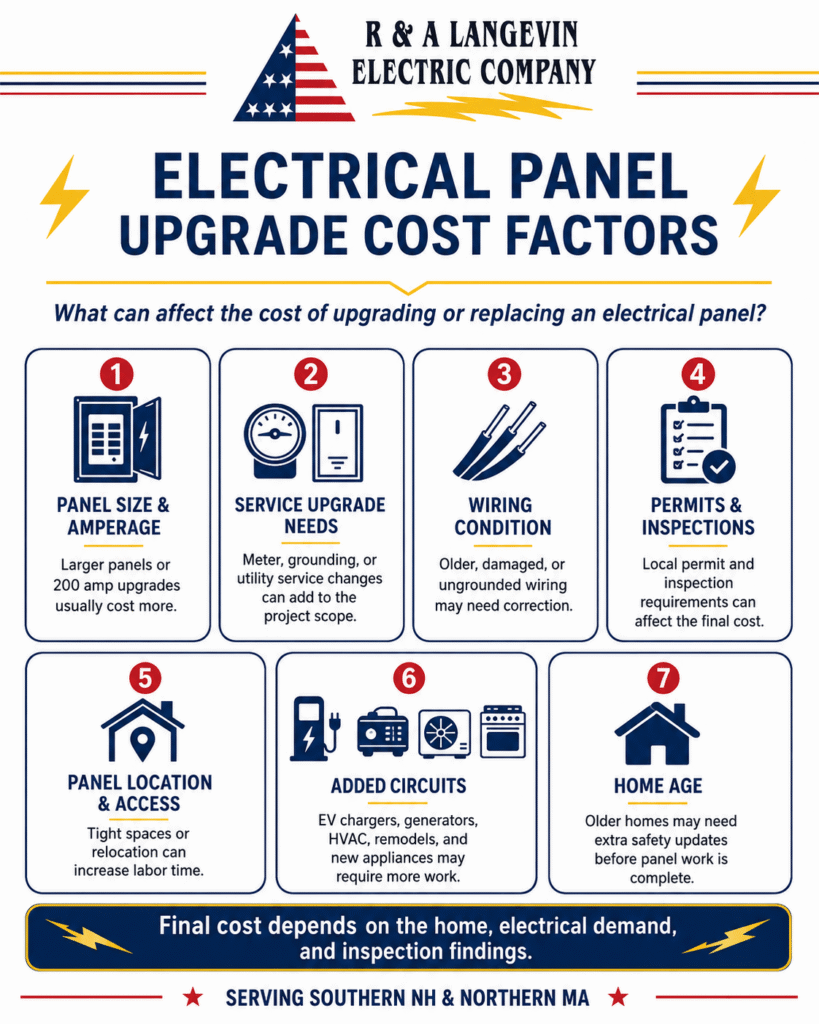
Several factors can change how much it costs to upgrade an electrical panel.
Panel Size and Amperage
Panel size matters. A smaller home may have different needs than a larger home with central air, electric appliances, a workshop, a finished basement, an EV charger, or a standby generator.
Many older homes may still have 100 amp service or smaller. A 200 amp panel is common for homes with larger electrical demand. Some properties may need more, but that depends on the load calculation and utility service.
A licensed electrician can help determine what size electrical panel you need based on your actual usage, not guesswork.
Service Upgrade Needs
Replacing a panel is not always the same as upgrading the electrical service.
If your home’s service equipment, meter, grounding, or utility connection cannot support the new capacity, additional work may be required. This is one reason the cost to upgrade an electrical panel can vary so much.
Wiring Condition
Older wiring, damaged conductors, improper past work, loose connections, or missing grounding can increase the scope.
If wiring issues are found during the inspection, they may need to be corrected before the new panel can be safely installed.
Permit Requirements
Panel upgrades and replacements often require permits and inspections. Permit fees vary by location and project type.
In Southern NH and Northern MA, requirements may differ depending on the town, city, utility, and scope of work. Your electrician can help you understand what is needed before the project begins.
Labor and Project Complexity
Labor is often one of the largest cost factors. A panel replacement requires careful shutdown, removal, installation, wiring, labeling, testing, and inspection.
The project may take longer if the panel is crowded, poorly labeled, hard to access, or connected to older wiring.
Panel Location
A panel in a clean, accessible utility space is usually easier to work on than one tucked into a tight corner, finished basement, closet, or area with clearance issues.
If the panel needs to be moved to meet access or code requirements, the cost can increase.
Home Age
Older homes can be more unpredictable. Homes across New England may have older panels, aging wiring, additions from different eras, or electrical work completed before modern power demands became common.
This does not always mean the entire house needs rewiring, but it does mean the panel should be inspected carefully.
Added Circuits
If you are adding new loads, the project may require more than a simple panel swap.
Common reasons for added circuits include:
- EV chargers
- Heat pumps
- Central AC equipment
- Electric water heaters
- Kitchen remodels
- Finished basements
- Home offices
- Workshops
- Standby generators
- Outdoor equipment
If your panel upgrade is connected to a bigger project, such as EV charger installation or generator installation and maintenance, the electrician should review the full electrical load before recommending a panel size.
Electrical Panel Upgrade vs Electrical Panel Replacement
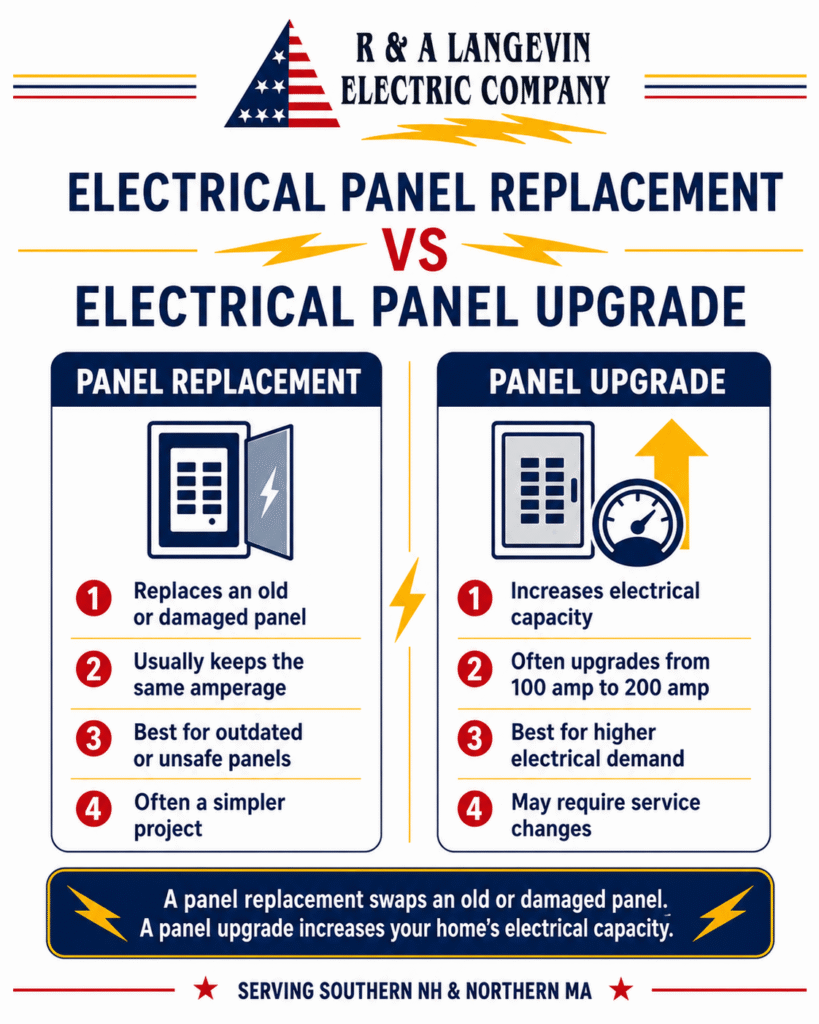
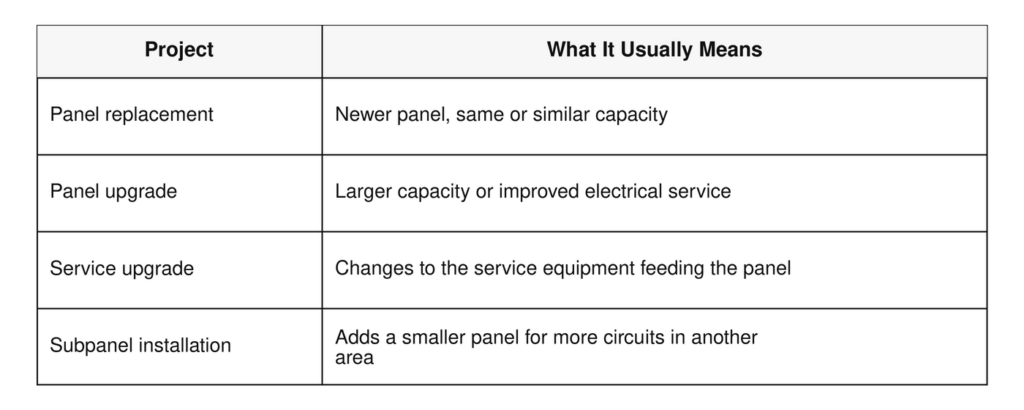
People often use the words “upgrade” and “replacement” the same way, but they can mean different things.
An electrical panel replacement usually means removing an old, damaged, unsafe, or outdated panel and installing a new one. The amperage may stay the same.
An electrical panel upgrade usually means increasing the electrical capacity, such as upgrading from 100 amps to 200 amps. This may require additional service work, utility coordination, permits, grounding updates, or wiring adjustments.
Here is a simple way to look at it:
If your home has frequent breaker trips, flickering lights, warm panel areas, or trouble supporting new appliances, you may need more than a basic replacement.
R&A Langevin Electric provides electrical system upgrades for homeowners who need safer, more reliable panel capacity.
When a 200 Amp Panel Upgrade May Be Needed
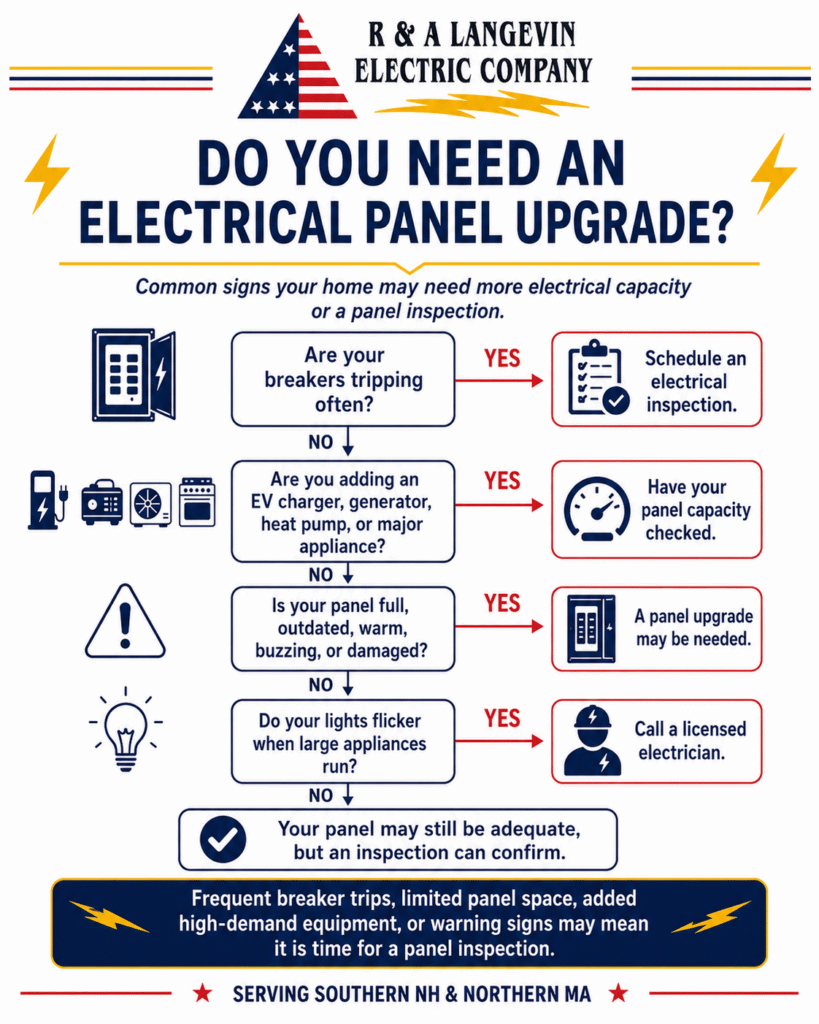
A 200 amp panel upgrade may be worth considering when your home’s electrical demand has outgrown the current system.
This is common when homeowners add equipment that pulls a significant amount of power.
You may need a 200 amp panel upgrade if:
- Your home still has 60 amp or 100 amp service
- Breakers trip often
- Lights flicker when large appliances run
- Your panel is full or overcrowded
- You are adding an EV charger
- You are installing a heat pump or central AC
- You are finishing a basement or adding rooms
- You are adding a workshop or major appliances
- You want standby generator support
- Your current panel is outdated, rusted, or damaged
A 200 amp panel is common in many modern homes, but it is not automatically required for every property. The right answer depends on the home’s load calculation and the electrical equipment you plan to use.
Cost Factors in Older Southern NH and Northern MA Homes
Older homes in Southern NH and Northern MA can be beautiful, well-built, and full of character. But their electrical systems may not always match today’s power needs.
Many older homes were built before households relied on multiple TVs, computers, central air systems, EV chargers, large appliances, home offices, and smart devices.
Panel upgrade cost may be affected by:
- Older wiring
- Lack of grounding
- Previous additions or remodels
- Limited panel space
- Fuse boxes or obsolete panels
- Outdated service equipment
- Corrosion or moisture
- Finished walls around the panel
- Clearance issues
- Utility coordination
This is why an in-person inspection matters. A quick phone estimate may not catch hidden conditions that affect safety, code compliance, or the final scope of work.
Can You Upgrade a Panel Without Rewiring the Whole House?
In many cases, yes. You may be able to upgrade or replace the electrical panel without rewiring the entire home.
However, it depends on the condition of the existing wiring.
If the wiring is safe, properly sized, grounded where required, and compatible with the new panel, a full-home rewire may not be needed. But if the electrician finds damaged wiring, unsafe connections, outdated materials, or overloaded circuits, some wiring corrections may be required.
A panel upgrade does not automatically mean a whole-house rewire. It does mean the system should be checked carefully before the work is approved.
That inspection protects the homeowner and helps prevent surprises during the project.
Does Homeowners Insurance Cover Electrical Panel Replacement?
Homeowners insurance may cover electrical panel replacement if the damage comes from a sudden covered event, such as fire, lightning, or certain storm-related damage. It usually does not cover replacement due to age, wear and tear, neglect, or an elective capacity upgrade. Coverage depends on the specific policy and cause of damage. Progressive explains that electrical panels are typically covered only when damage results from a sudden and accidental covered loss, not from age or improper maintenance.
If your panel was damaged by a storm, fire, power surge, or another sudden event, contact your insurance company and document the damage. A licensed electrician can inspect the system and provide a clear written assessment.
If the panel simply needs to be upgraded because it is old, undersized, or no longer supports modern demand, that is usually considered a homeowner maintenance or improvement cost.
Why Panel Work Should Be Done by a Licensed Electrician
Electrical panel work is not a safe DIY project.
The panel is the central point where electricity enters and is distributed throughout your home. Mistakes can lead to shock, fire risk, damaged appliances, failed inspections, insurance issues, or unsafe wiring.
A licensed electrician can:
- Inspect the existing panel
- Identify damaged or overloaded components
- Confirm proper panel size
- Perform a load calculation
- Check grounding and bonding
- Determine whether permits are needed
- Coordinate inspection requirements
- Install the panel safely
- Label circuits clearly
- Test the completed work
This is especially important if you are upgrading capacity for larger appliances, an EV charger, HVAC equipment, or a generator.
For homeowners in Southern NH and Northern MA, R&A Langevin Electric can inspect your current setup and recommend the right next step through its residential electrical services.
Need an Electrical Panel Upgrade or Replacement?
If your panel is outdated, overloaded, damaged, buzzing, warm, frequently tripping, or no longer supports your home’s electrical needs, it may be time to schedule an inspection.
R&A Langevin Electric helps homeowners in Southern NH and Northern MA with panel upgrades, breaker issues, added circuits, electrical repairs, and service improvements.
Contact R&A Langevin Electric to request service and get a professional recommendation for your home.
Frequently Asked Questions
How much does it cost to upgrade an electrical panel?
Electrical panel upgrade cost often falls somewhere in the low thousands, but the final price depends on amperage, service requirements, wiring condition, permits, labor, panel location, and added circuits. A licensed electrician should inspect the system before providing a firm estimate.
Is a 200 amp panel upgrade worth it?
A 200 amp panel upgrade can be worth it if your home has growing electrical demand, frequent breaker trips, limited panel space, central AC, EV charging, a generator, electric appliances, or planned renovations. It may improve capacity and help support modern electrical use.
Do I need a permit to replace an electrical panel?
In many areas, electrical panel replacement or upgrade work requires a permit and inspection. Requirements can vary by town or municipality in Southern NH and Northern MA, so homeowners should check locally or work with a licensed electrician who understands the process.
Can I upgrade my panel without rewiring the house?
Yes, it may be possible to upgrade the panel without rewiring the entire house if the existing wiring is safe, properly sized, and in good condition. If damaged, outdated, or unsafe wiring is found, some wiring corrections may be needed.
Does homeowners insurance cover electrical panel replacement?
Homeowners insurance may cover electrical panel replacement if the damage was caused by a covered event, such as fire, lightning, or certain storm damage. It usually does not cover age, wear and tear, poor maintenance, or elective upgrades.
How long does it take to replace an electrical panel?
Many panel replacement projects can be completed in one working day, but more complex jobs may take longer. Extra time may be needed for service upgrades, utility coordination, permits, inspections, wiring corrections, or panel relocation.