
Many people use the terms electrician and electrical contractor as if they mean the same thing. They are closely related, but they do not always refer to the same role.
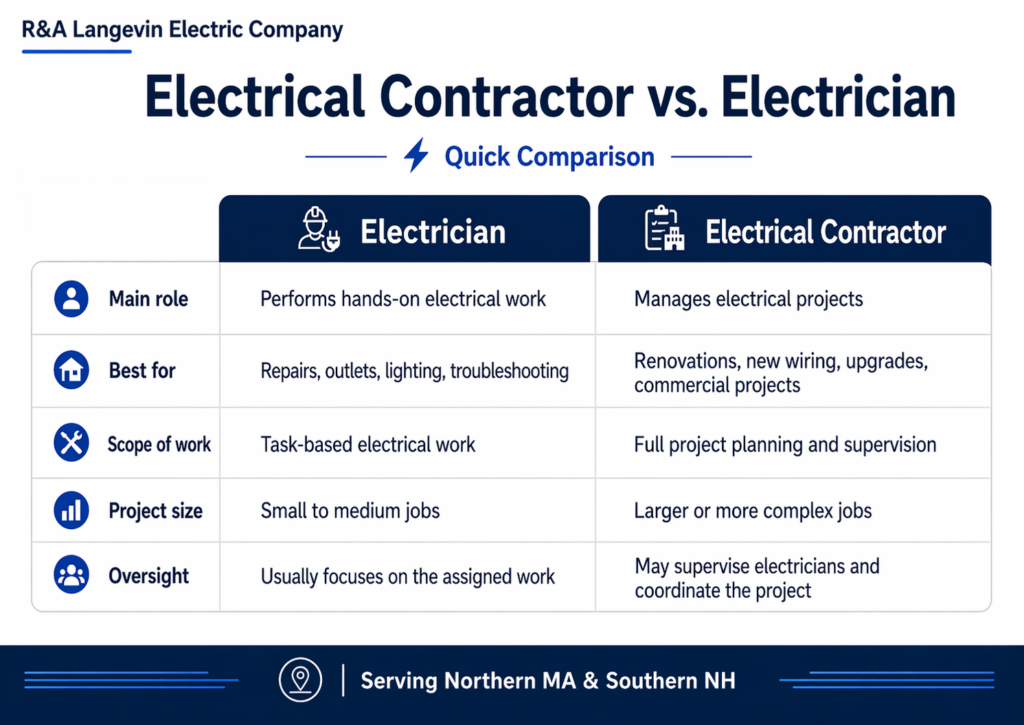
An electrician usually performs the hands-on electrical work. This can include repairs, wiring, outlet installation, lighting installation, breaker replacement, and troubleshooting.
An electrical contractor often manages larger electrical projects. This may include planning the job, supervising electricians, coordinating permits, managing timelines, and making sure the work meets safety and code requirements.
If you need a small repair, an electrician may be the right fit. If you are planning a renovation, new build, major wiring project, panel upgrade, or commercial electrical work, an electrical contractor is usually the better choice.
Electrical Contractor vs. Electrician: Quick Comparison
What Does an Electrician Do?
An electrician is trained to install, repair, maintain, and troubleshoot electrical systems.
Electricians often work on homes, offices, commercial buildings, and other properties. Their job is hands-on. They deal directly with wiring, panels, fixtures, outlets, switches, breakers, and other electrical components.
You may need an electrician if you have a specific electrical issue that needs to be repaired or installed.
Common electrician services include:
- Fixing faulty wiring
- Installing outlets or switches
- Replacing light fixtures
- Troubleshooting power issues
- Repairing tripping breakers
- Installing ceiling fans
- Replacing damaged electrical components
- Handling small residential electrical repairs
For many homeowners, an electrician is the right person to call for everyday electrical work. If your lights flicker, an outlet stops working, or a breaker keeps tripping, an electrician can inspect the issue and complete the repair safely.
For home-related repairs and installations, explore our residential electrical services.
What Does an Electrical Contractor Do?
An electrical contractor usually has a broader role.
Instead of focusing only on one task, an electrical contractor may oversee the full electrical project. This can include planning, scheduling, budgeting, obtaining permits, supervising electricians, and making sure the work follows applicable safety standards.
Electrical contractors are often involved in larger jobs, such as new construction, renovations, electrical upgrades, and commercial projects.
You may need an electrical contractor for:
- New home wiring
- Full property rewiring
- Major renovations
- Electrical panel upgrades
- Commercial electrical work
- Office or retail build-outs
- Large lighting projects
- Generator installation
- Electrical system upgrades
- Projects that require permits or inspections
In many cases, electricians complete the hands-on work while the electrical contractor manages the project from start to finish.
For larger jobs, view our electrical services to see how we can help with your project.
The Main Difference Between an Electrician and an Electrical Contractor
The main difference comes down to scope.
An electrician usually performs the electrical work.
An electrical contractor usually manages the electrical project.
For example, if you need a new outlet installed in your home, you may only need an electrician. But if you are renovating an entire property, adding new circuits, upgrading your panel, and coordinating inspections, an electrical contractor may be the better fit.
Think of it this way:
An electrician is often the professional doing the repair or installation.
An electrical contractor may be the professional planning, coordinating, and overseeing the larger job.
Both roles are important. The right choice depends on the size and complexity of your project.
When Should You Hire an Electrician?
You should hire an electrician when you need a specific electrical repair, replacement, or installation.
This is usually the right choice for smaller jobs that do not require full project management.
Hire an electrician for tasks like:
- Replacing outlets
- Installing light fixtures
- Fixing switches
- Troubleshooting electrical problems
- Repairing faulty wiring
- Replacing breakers
- Installing ceiling fans
- Checking power issues in one area of the home
These jobs still require proper training and care. Electrical work should never be treated as a simple DIY task, especially when wiring, panels, or live circuits are involved.
A licensed electrician can help make sure the work is done safely and correctly.
When Should You Hire an Electrical Contractor?
You should hire an electrical contractor when the project is larger, more complex, or requires planning and coordination.
This is especially important for projects that involve multiple rooms, major upgrades, new wiring, or commercial spaces.
Hire an electrical contractor for projects like:
- Building a new home
- Renovating a home or business
- Upgrading an electrical panel
- Rewiring a property
- Installing electrical systems for an addition
- Managing commercial electrical work
- Coordinating permits and inspections
- Planning a larger electrical upgrade
Electrical contractors are also a strong choice when several parts of the project need to work together. For example, a renovation may require new wiring, lighting, outlets, panel work, and inspection coordination. An electrical contractor can help manage those moving parts.
For business properties, learn more about our commercial electrical services.
Do Electrical Contractors and Electricians Work Together?
Yes. Electricians and electrical contractors often work together, especially on larger projects.
An electrical contractor may plan and manage the job, while electricians complete the hands-on installation, repairs, or wiring. This setup helps keep the project organized and makes sure each part of the work is handled by the right professional.
For example, during a commercial build-out, the electrical contractor may coordinate the full project. Electricians may then install wiring, outlets, panels, lighting, and other electrical systems based on the project plan.
This is why larger projects often need more than one person. Good electrical work is not only about installation. It also involves planning, safety, timing, and coordination.
Why Choosing the Right Professional Matters
Hiring the right electrical professional helps protect your home, business, and budget.
If you hire someone for a job outside their scope, the project may take longer, cost more, or create safety concerns. Electrical work also needs to follow proper code and safety requirements, especially for larger projects.
The right professional can help you:
- Avoid unsafe wiring
- Reduce the risk of electrical issues
- Keep the project organized
- Make sure the work is completed correctly
- Plan for future electrical needs
- Avoid delays during renovations or upgrades
For a small repair, an electrician may be enough.
For a larger project, an electrical contractor can provide the planning and oversight needed to complete the work safely and efficiently.
Need Help Choosing the Right Electrical Service?
If you are not sure whether you need an electrician or an electrical contractor, R&A Langevin can help.
We provide high-quality electrical services for homeowners and businesses across Southern New Hampshire and Northern Massachusetts. Whether you need a small repair, a panel upgrade, new wiring, commercial electrical work, or a larger electrical project, our team can help you understand the right next step.
Contact our team today to request a quote or discuss your project.
Frequently Asked Questions
What is the main difference between an electrician and an electrical contractor?
An electrician usually performs hands-on electrical work, such as repairs, installations, and troubleshooting. An electrical contractor often manages larger electrical projects, including planning, supervision, permits, scheduling, and code compliance.
Should I hire an electrician or an electrical contractor for a small repair?
For a small repair, such as replacing an outlet, fixing a switch, installing a light fixture, or checking a tripping breaker, an electrician is usually the right choice.
When should I hire an electrical contractor?
You should hire an electrical contractor for larger projects, such as new home wiring, major renovations, panel upgrades, commercial electrical work, or projects that require planning, permits, and coordination.
Can an electrical contractor also do electrical work?
In many cases, yes. Some electrical contractors are licensed electricians themselves, while others employ electricians who complete the hands-on work under their supervision.
Do I need an electrical contractor for a home renovation?
You may need an electrical contractor if the renovation involves new wiring, panel upgrades, added circuits, lighting changes, or work across multiple rooms. A contractor can help manage the electrical side of the project and coordinate the work properly.
Why is it important to hire a licensed electrical professional?
Electrical work affects the safety of your home or business. Hiring a licensed professional helps reduce the risk of faulty wiring, electrical hazards, failed inspections, and future repair issues.