
If your main circuit breaker keeps tripping, your home may be dealing with overloaded electrical demand, a short circuit, damaged wiring, storm damage, moisture, a faulty main breaker, or an outdated electrical panel. Because the main breaker controls power to the entire home, repeated trips should not be ignored. A licensed electrician should inspect the issue before it becomes a larger safety risk.
Main breaker problems can feel stressful because they affect more than one outlet or room. In many cases, they shut down power to most or all of the house.
For homeowners in Southern NH and Northern MA, this can happen after storms, during heavy appliance use, or in older homes with panels that may no longer support modern electrical needs.
What the Main Circuit Breaker Does
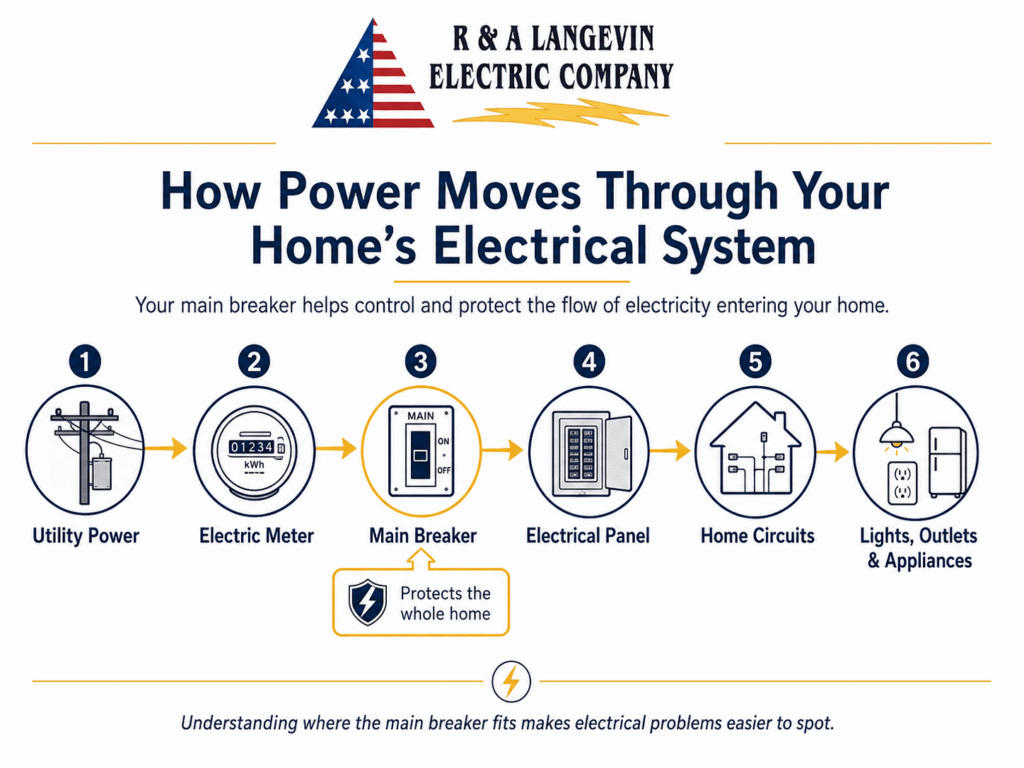
Your main circuit breaker is the primary safety switch for your home’s electrical system. It controls the flow of electricity from the utility service into your electrical panel.
When the system detects a problem, the main breaker trips to stop power from continuing through the panel. This helps reduce the risk of overheating, electrical damage, or fire.
A branch circuit breaker usually controls one area, room, or appliance circuit. The main breaker is different. It protects the entire electrical system.
That is why a main breaker trip is more serious than a single kitchen, bathroom, or bedroom circuit shutting off.
Common Reasons the Main Breaker Keeps Tripping
A main electrical breaker keeps tripping for several possible reasons. Some are linked to everyday electrical demand. Others may point to a serious electrical panel problem.
Overloaded Electrical Demand
Your home may be using more power than the electrical service can safely handle.
This can happen when several high-demand appliances run at the same time, such as:
- Central air conditioning
- Electric dryer
- Electric oven
- Space heaters
- Water heater
- EV charger
- Heat pump
- Workshop tools
If the main breaker trips when multiple large appliances are running, the electrical demand may be too high for the panel or service size.
This is common in older homes that were not built for today’s electrical loads.
Damaged Wiring
Damaged, loose, or deteriorating wiring can cause unsafe electrical conditions. This may happen because of age, pests, moisture, past DIY work, or outdated materials.
Wiring issues should always be handled by a licensed electrician. Do not open the panel or inspect wiring yourself.
Short Circuit
A short circuit happens when electrical current moves along an unintended path. This can create a sudden surge of current that causes the breaker to trip.
Short circuits can be dangerous. If the main breaker trips immediately after being reset, stop resetting it and call an electrician.
Ground Fault
A ground fault happens when electricity escapes its intended path and moves toward a grounded surface. Moisture, damaged insulation, outdoor wiring issues, or faulty equipment can contribute to this problem.
Ground faults are especially concerning around basements, garages, outdoor areas, and damp spaces.
Faulty Main Breaker
Sometimes, the main breaker itself is worn out or failing. Breakers can weaken over time, especially if they have tripped repeatedly or have been exposed to heat, moisture, or electrical stress.
A faulty breaker may trip even when the electrical load is not unusually high.
Outdated Electrical Panel
An older panel may struggle to keep up with modern electrical demands. Many homes now use more appliances, electronics, HVAC equipment, and charging devices than older panels were designed to support.
If your panel is outdated, frequently overloaded, or showing signs of wear, you may need an electrical panel upgrade.
Storm Damage
Storms can affect electrical systems in several ways. Lightning, power surges, fallen branches, water intrusion, and utility issues may all contribute to breaker trips.
If your main breaker started tripping after a storm, schedule an inspection before assuming everything is fine.
Moisture in the Electrical System
Moisture and electricity do not mix. Water exposure near the panel, exterior service equipment, basement wiring, or outdoor circuits can create serious hazards.
If you notice water near your panel or suspect moisture has reached electrical components, avoid the area and call for help.
Why Main Breaker Trips Are More Serious Than Branch Circuit Trips
A branch breaker trip usually affects one area of the home. For example, a kitchen appliance may trip a kitchen circuit. A bathroom outlet may trip a GFCI-protected circuit.
A main breaker trip affects the entire electrical system.
That means the issue could involve:
- The panel
- The service entrance
- The main breaker
- The home’s total electrical load
- A major wiring fault
- Large appliance demand
- Storm or utility-related damage
If your main breaker trips once during an unusual event, such as a storm or power surge, it may not always mean there is a major problem. But if the main breaker trips repeatedly, something needs to be inspected.
Repeated trips are your electrical system’s way of saying something is wrong.
What You Can Safely Check Before Calling an Electrician
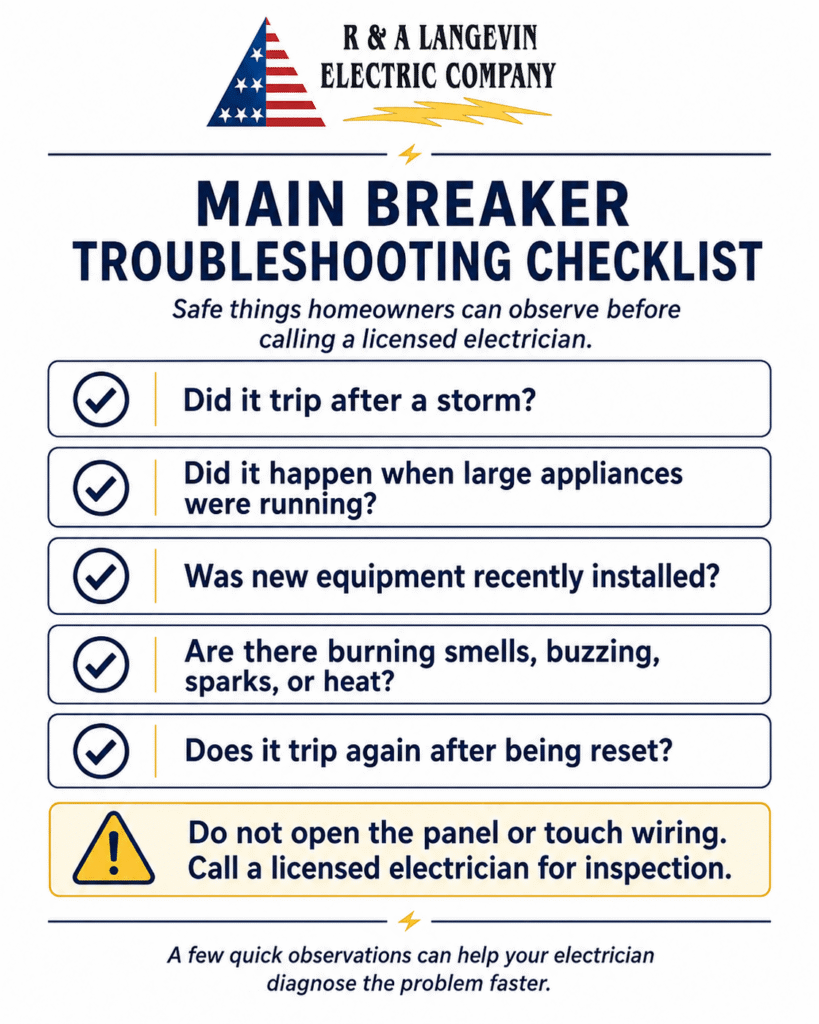
You should not open your electrical panel, remove panel covers, touch wiring, or try to replace the breaker yourself.
However, there are a few safe observations you can make before calling a licensed electrician.
Check When the Main Breaker Trips
Take note of when the issue happens.
Does it trip:
- When the AC starts?
- When the dryer is running?
- When the oven, water heater, or heat pump turns on?
- During peak appliance use?
- After a storm?
- After plugging in new equipment?
- After installing a new appliance or EV charger?
This information can help the electrician narrow down the cause.
Check Whether Large Appliances Are Running
If the main breaker trips only when several large appliances run at the same time, the issue may be overloaded electrical demand.
For example, a home running central AC, an electric dryer, an oven, and an EV charger at the same time may exceed what the panel can safely support.
Check for Recent Electrical Changes
Think about whether anything changed recently.
This may include:
- New appliance installation
- New HVAC equipment
- EV charger installation
- Renovation work
- New outlets or circuits
- Generator connection work
- Basement finishing
- Home addition wiring
If the issue started after new electrical work or new equipment, that may be connected.
Check for Storm Timing
If the main breaker started tripping after heavy rain, wind, lightning, or a power outage, storm damage may be involved.
In that case, avoid repeated resets and schedule an inspection.
Warning Signs You Should Not Ignore
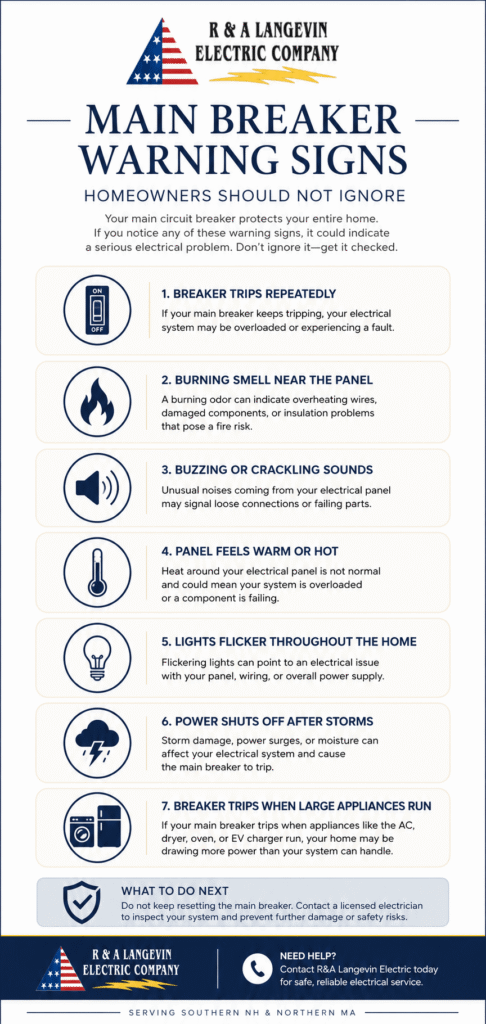
Some warning signs need urgent attention. If you notice any of the following, stop resetting the breaker and call a licensed electrician.
Burning Smell
A burning smell near the panel, outlets, switches, or appliances is a serious warning sign. It may point to overheating wiring, damaged insulation, or failing equipment.
Buzzing Electrical Panel
A light hum may be normal in some electrical equipment, but loud buzzing, crackling, or sizzling sounds are not.
If your panel is making unusual sounds, do not touch it.
Warm or Hot Electrical Panel
Your electrical panel should not feel hot. Heat can point to overloaded circuits, loose connections, or failing components.
Sparks
Sparks from the panel, outlet, switch, or appliance connection should never be ignored.
Flickering Lights
Flickering lights throughout the house may indicate a loose connection, panel issue, overloaded service, or utility-side problem.
Partial Power Loss
If some areas of your home lose power while others still work, this may involve a service issue, panel issue, or damaged wiring.
Repeated Trips After Reset
If the main breaker trips again shortly after being reset, do not keep trying. Repeated resets can increase risk and may worsen the problem.
For urgent issues, R&A Langevin Electric provides emergency electrical service for homeowners dealing with serious electrical concerns.
Could You Need an Electrical Panel Upgrade?
You may need an electrical panel upgrade if your home’s electrical system can no longer support your daily power needs.
This is especially common in older homes across Southern NH and Northern MA, where panels may have been installed before today’s larger appliances, HVAC systems, home offices, EV chargers, and smart devices became common.
You may need a panel upgrade if:
- The main breaker keeps tripping
- Lights flicker when large appliances start
- The panel feels warm
- You frequently reset breakers
- You are adding an EV charger
- You are installing new HVAC equipment
- You are renovating or adding rooms
- Your panel is outdated or undersized
- Your home still uses older electrical components
A licensed residential electrician can inspect the panel, calculate your electrical load, and determine whether a repair, new circuit, or panel upgrade is the right solution.
How a Licensed Electrician Diagnoses Main Breaker Problems
A licensed electrician does more than reset the breaker. They inspect the system to find the cause safely and correctly.
The inspection may include:
- Checking the electrical panel condition
- Reviewing the main breaker
- Looking for signs of overheating
- Testing electrical load
- Checking for loose or damaged wiring
- Inspecting large appliance circuits
- Reviewing recent electrical additions
- Looking for moisture or storm damage
- Determining whether the panel is overloaded
- Checking if an upgrade is needed
This helps separate a one-time issue from a larger safety concern.
It also helps prevent unnecessary replacements. In some cases, the solution may be a dedicated circuit or breaker replacement. In others, the home may need a larger service or panel upgrade.
Need Help With a Main Breaker That Keeps Tripping?
If your main breaker keeps tripping, do not ignore it and do not keep resetting it without understanding why.
R&A Langevin Electric helps homeowners in Southern NH and Northern MA with electrical panel issues, breaker problems, emergency repairs, system upgrades, and residential electrical service.
If your main breaker trips repeatedly, smells hot, buzzes, sparks, or shuts off power to your home, schedule an inspection with a licensed electrician.
Contact R&A Langevin Electric to request service.
Frequently Asked Questions
Is it dangerous if my main breaker keeps tripping?
Yes, it can be dangerous if your main breaker keeps tripping repeatedly. The problem may be overloaded electrical demand, damaged wiring, a faulty breaker, moisture, storm damage, or an electrical panel issue. A licensed electrician should inspect the system before you continue resetting the breaker.
Can I reset my main breaker myself?
You may be able to reset it once if there are no signs of burning smells, heat, sparks, buzzing, moisture, or damage. However, if the main breaker trips again, stop resetting it and call an electrician. Repeated trips usually mean there is an underlying problem.
Why does my main breaker trip when appliances run?
Your main breaker may trip when large appliances run because your home is drawing more power than the system can safely handle. This can happen with central AC, electric dryers, ovens, water heaters, heat pumps, or EV chargers. It may also point to an undersized or outdated panel.
Can an old electrical panel cause the main breaker to trip?
Yes. An old or undersized electrical panel can cause repeated breaker trips, especially if your home now uses more power than the panel was designed to support. A licensed electrician can determine whether you need repairs, added circuits, or an electrical panel upgrade.
Should I replace the breaker or upgrade the panel?
That depends on the cause. If the main breaker is faulty, replacement may be enough. If the panel is outdated, overloaded, damaged, or too small for your home’s electrical demand, a panel upgrade may be the better long-term solution. An electrician can diagnose the issue safely.
When should I call an emergency electrician?
Call an emergency electrician if the main breaker keeps tripping, you smell burning, hear buzzing from the panel, see sparks, feel heat around the panel, experience partial power loss, or notice the problem after storm damage. These signs may point to a serious electrical hazard.