
Your electrical panel is the control center of your home’s power system. It sends electricity to your lights, outlets, appliances, heating and cooling equipment, and other devices.
When the panel is working properly, you probably do not think about it much. But when it starts showing warning signs, it can affect your home’s safety, comfort, and ability to handle modern electrical demand.
You may need to replace your electrical panel if your breakers trip often, your lights flicker when appliances run, the panel feels warm, you notice burning smells or scorch marks, or your home still has an outdated panel that cannot support your current electrical needs.
Some warning signs need immediate attention. If you smell burning near the panel, hear buzzing or crackling sounds, see sparks, or notice burn marks, call a licensed electrician right away.
Quick Checklist:
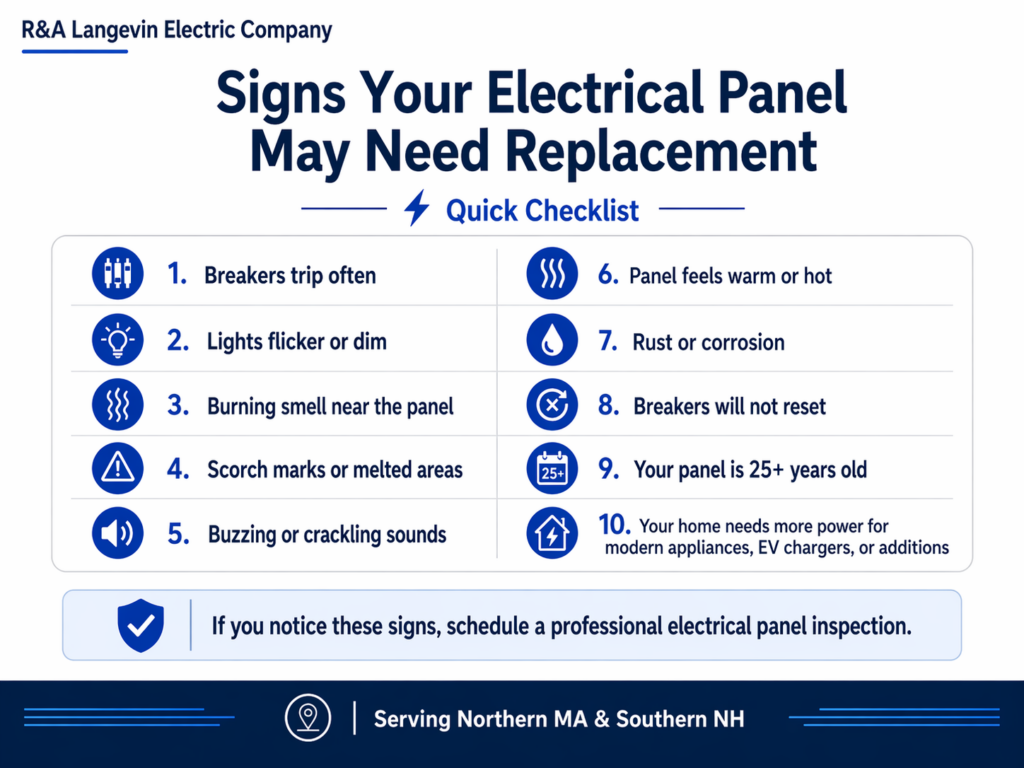
If any of these sound familiar, schedule a professional inspection through our residential electrical services.
1. Your Breakers Trip Often
A circuit breaker is designed to shut off power when a circuit is overloaded or unsafe. An occasional trip may happen, especially if too many devices are running on the same circuit.
But if your breakers trip regularly, something may be wrong.
Frequent breaker trips can be caused by:
- Overloaded circuits
- Faulty breakers
- Loose wiring
- Outdated wiring
- A panel that cannot handle your home’s electrical demand
If you keep resetting the same breaker, do not ignore it. The breaker may be warning you that the circuit is under stress.
A licensed electrician can inspect the panel, identify the cause, and determine whether the issue can be repaired or if the panel needs to be replaced.
2. Your Lights Flicker or Dim
Flickering lights can seem minor, but they may point to a bigger electrical issue.
If your lights dim or flicker when you turn on large appliances, such as an air conditioner, microwave, washing machine, dryer, or space heater, your electrical panel may be struggling to support the load.
This is especially common in older homes that were not built for today’s electrical use.
Modern homes often rely on more devices, larger appliances, home offices, smart systems, and chargers. If your panel is outdated or undersized, it may not provide enough steady power.
Flickering lights should be checked by a licensed electrician, especially if the issue happens often or affects multiple rooms.
3. You Smell Burning Near the Panel
A burning smell near your electrical panel is a serious warning sign.
It may smell like burning plastic, hot metal, or something electrical overheating. This can happen when wires, breakers, or internal panel components are damaged, overloaded, or overheating.
If you notice a burning smell:
- Stop using the affected circuit if you can do so safely
- Do not touch the panel if it feels hot
- Avoid trying to repair the issue yourself
- Call a licensed electrician right away
A burning smell should never be brushed off. Electrical overheating can increase the risk of fire and should be inspected immediately.
4. You See Scorch Marks or Melted Areas
Scorch marks, dark spots, melted plastic, or discoloration around breakers are signs that the panel may have overheated.
You may notice these marks:
- Around individual breakers
- On the panel cover
- Near wiring connections
- Around outlets connected to the same circuit
Visible heat damage means something is not working safely. Even if the power still works, the issue should be checked right away.
In some cases, a damaged breaker or wire may be repairable. In other cases, the panel may need replacement to restore safe electrical performance.
5. The Electrical Panel Feels Warm or Hot
Your electrical panel should not feel hot.
A slightly warm area may happen under certain conditions, but noticeable heat is a warning sign. It may point to overloaded circuits, loose connections, failing breakers, or internal damage.
If your panel feels warm or hot, do not open it or try to investigate inside. Panel work involves serious electrical risk and should only be handled by a qualified professional.
Schedule an inspection through our electrical services if your panel feels warm, gives off heat, or seems unusual in any way.
6. You Hear Buzzing or Crackling Sounds
Electrical panels should operate quietly.
If you hear buzzing, humming, sizzling, popping, or crackling sounds from your panel, call an electrician as soon as possible.
These sounds may be caused by:
- Loose wiring
- Faulty breakers
- Arcing
- Overloaded circuits
- Damaged panel components
Electrical sounds coming from the panel are not normal. Waiting too long can make the problem worse and may increase safety risks.
7. There Is Rust or Corrosion
Rust or corrosion on or inside your electrical panel is another warning sign.
Moisture and electricity are a dangerous combination. If water has entered the panel, it can damage breakers, wiring, and internal connections.
Signs of moisture damage may include:
- Rust on the panel cover
- Corroded breakers
- Water stains near the panel
- Dampness around the panel area
- A musty smell near the electrical equipment
If you see rust or signs of water damage, have the panel inspected right away. Depending on the damage, replacement may be needed.
8. Your Panel Is Old or Outdated
Electrical panels do not last forever.
Many panels can last for decades, but age still matters. Older panels may not be built to support modern electrical demand. They may also lack newer safety features or have components that are harder to service.
You should consider an inspection if your panel is:
- 25 years old or older
- Frequently overloaded
- Still using outdated equipment
- Too small for your current power needs
- Not compatible with planned upgrades
- Showing signs of wear or damage
Older panels are especially worth checking if you are planning a renovation, adding appliances, installing central air, finishing a basement, or adding an EV charger.
9. Your Home Does Not Have Enough Power for Modern Needs
Your electrical panel may have been enough when your home was built. But your power needs may be much higher today.
You may need a panel upgrade if you are adding:
- An EV charger
- A hot tub
- A home office setup
- New HVAC equipment
- A finished basement
- A kitchen remodel
- Large appliances
- More lighting or outlets
- A home addition
If your current panel does not have enough capacity, forcing more demand onto the system can lead to breaker trips, overloaded circuits, and future safety concerns.
A licensed electrician can check your panel capacity and explain whether your home needs a repair, upgrade, or full panel replacement.
10. Your Home Has an FPE or Other Outdated Panel
Some older electrical panels are known for safety concerns.
Federal Pacific Electric, also called FPE or Stab-Lok panels, have been widely discussed because certain breakers may fail to trip properly during overloads or short circuits. If your home has an FPE panel, it should be evaluated by a licensed electrician.
Other outdated or hard-to-service panels may also need attention, especially if replacement parts are difficult to find or the panel no longer meets your home’s electrical needs.
If you are unsure what type of panel you have, an electrician can inspect it and recommend the safest next step.
Do You Need a Panel Repair or Full Replacement?
Not every panel issue means you need a full replacement.
Sometimes, the problem can be fixed by replacing a faulty breaker, repairing a loose connection, or correcting an overloaded circuit.
However, full electrical panel replacement may be recommended if the panel is:
- Outdated
- Damaged
- Undersized
- Overheating
- Corroded
- Unsafe
- Unable to support your current electrical needs
A professional inspection is the best way to know what your home actually needs. A licensed electrician can explain whether a repair, upgrade, or full replacement is the safest choice.
What to Expect During Electrical Panel Replacement
Electrical panel replacement should always be handled by a licensed electrician or electrical contractor.
The process may include:
- Inspecting your current panel
- Reviewing your home’s electrical needs
- Checking panel capacity
- Planning the replacement
- Coordinating permits if needed
- Turning off power during the work
- Removing the old panel
- Installing the new panel
- Labeling circuits
- Testing the system
- Completing inspection requirements
Most panel replacements take several hours, depending on the condition of the existing system and the scope of the work.
A professional electrician will explain what to expect before the project starts, including timing, power shutoff, permits, and cleanup.
Why You Should Not Replace an Electrical Panel Yourself
Electrical panel replacement is not a DIY project.
It involves high-voltage electrical work, code requirements, permits, utility coordination, and safety risks. Mistakes can lead to electrical shock, fire hazards, failed inspections, or damage to your home’s electrical system.
Always hire a licensed electrician or electrical contractor for panel replacement.
If you own or manage a business property, our commercial electrical services can help with panel upgrades, capacity issues, and larger electrical projects.
Need Electrical Panel Replacement in Southern NH or Northern MA?
If your electrical panel is old, damaged, overloaded, or showing warning signs, R&A Langevin Electric Company can help.
We provide residential and commercial electrical services across Southern New Hampshire and Northern Massachusetts. Our team can inspect your panel, explain your options, and recommend the safest solution for your home or business.
Whether you need a panel repair, panel upgrade, or full electrical panel replacement, contact R&A Langevin Electric today to request a quote.
Frequently Asked Questions:
How do I know if my electrical panel needs to be replaced?
You may need to replace your electrical panel if your breakers trip often, lights flicker, the panel feels warm, you notice burning smells, or the panel is old, damaged, rusty, or unable to support your home’s electrical needs.
Is a warm electrical panel dangerous?
Yes, a warm or hot electrical panel can be a warning sign of overloaded circuits, loose connections, or failing components. Have it inspected by a licensed electrician as soon as possible.
Why do my breakers keep tripping?
Breakers may trip because a circuit is overloaded, a breaker is faulty, or the panel cannot handle your home’s electrical demand. If it happens often, schedule an inspection.
How long does an electrical panel last?
Many electrical panels last for decades, but age is not the only factor. Your panel may need replacement sooner if it is damaged, outdated, undersized, or showing safety concerns.
Should I replace my electrical panel before installing an EV charger?
You may need a panel upgrade before installing an EV charger, especially if your current panel does not have enough capacity. A licensed electrician can check your panel and recommend the safest option.
Can I replace my electrical panel myself?
No. Electrical panel replacement is not safe as a DIY project. It involves high-voltage work, permits, code requirements, and inspections. Always hire a licensed electrician or electrical contractor.
How long does electrical panel replacement take?
Electrical panel replacement often takes several hours and may take most of the day, depending on the home, existing panel, permit requirements, and whether additional electrical upgrades are needed.
What are the most urgent signs of electrical panel problems?
Burning smells, scorch marks, buzzing sounds, sparks, visible melting, heat from the panel, and breakers that will not reset are urgent warning signs. Call a licensed electrician right away if you notice any of these.